

Two people may undergo similar operations, yet their health insurance claims can receive different decisions. The reason often lies in why the surgery was needed. A procedure done to change appearance is usually treated differently from one required after an injury or illness.
This distinction matters before you agree to treatment, particularly when hospital bills could affect your savings. Understanding how insurers classify cosmetic and reconstructive surgery can help you ask the right questions and avoid unexpected expenses during recovery.
Cosmetic surgery changes a person's appearance rather than treating an illness or restoring a damaged body part. Examples include facelifts, liposuction and cosmetic nose reshaping. These are usually elective.
A medical policy usually excludes treatment performed only to improve looks, even when a qualified surgeon carries it out in a hospital. The procedure's name alone does not decide coverage. The medical reason behind it matters more.
Reconstructive surgery repairs or restores a body part affected by an accident, burns, cancer or another medical condition. Examples include skin grafts after burns and reconstruction following cancer surgery.
Such operations may improve appearance, but their main purpose is to address damage, function or a medical need. The surgeon's diagnosis, treatment records and explanation of why the procedure is necessary help the insurer assess whether the claim is eligible.
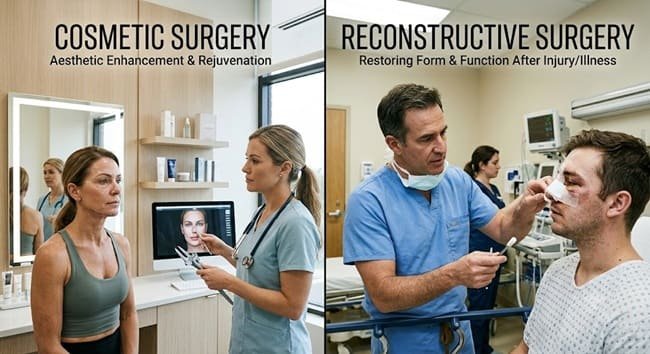
The main difference is the purpose of treatment, which also affects how an insurer reviews the surgery and its costs.
| Aspect | Cosmetic surgery | Reconstructive surgery |
| Purpose | Improve appearance | Repair damage or restore function |
| Common reason | Personal preference | Injury, illness or medical need |
| Examples | Facelift, cosmetic nose reshaping | Skin grafts, reconstruction after cancer |
| Insurance position | Usually excluded | May be covered under policy conditions |
| Evidence | Treatment records | Diagnosis, surgeon's advice and reports |
Most individual health insurance plans exclude surgery performed only for appearance. Paying a hospital bill does not, by itself, make the procedure eligible. The insurer examines the purpose of treatment and the wording of the policy.
Examples usually excluded include:
A medically necessary operation might use techniques also used in cosmetic surgery. In such cases, the reason for treatment and the doctor's records become important.
Reconstructive treatment may be covered when it follows an accident, burns or cancer, or when it is medically necessary to remove a direct and immediate health risk. The treating doctor's certification and policy terms are important.
Examples include:
Approval is not automatic. The insurer may review hospitalisation requirements, waiting periods, exclusions and the treatment being claimed. A reconstructive procedure performed mainly for appearance may still be excluded. Confirm benefits before surgery rather than assuming a doctor's recommendation guarantees payment.
The answer comes from your policy document and insurer, not from the name printed on a hospital estimate.
Before booking a procedure:
If the insurer declines a request, ask which policy clause applies. Keep medical records and correspondence in case you need clarification or wish to raise a complaint.
Cosmetic and reconstructive surgery may look similar, but insurers assess them for different reasons. Procedures done only to improve appearance are generally excluded, while medically necessary reconstruction may qualify under specific policy terms. Before treatment, check the exclusions, discuss medical necessity with your surgeon and seek written guidance from your insurer. A little preparation can make your financial responsibilities clearer and help you focus on recovery rather than unexpected bills.