

One of the best replacements for missing teeth is considered to be dental implants. They are considered to be trustworthy solutions as they help in restoring the capacity to chew, improve smile aesthetics, and support the better preservation of healthy jawbone. However, the adequate jawbone density that is required for successfully carrying out this treatment is not found in every patient. This is when it is suggested to carry out a dental implant bone graft either before or during implant placement.
The jawbone becomes stronger, or is reconstructed, using a major dental procedure known as bone grafting. This provides a stable base for implants. Knowledgeable choices are made by the patients regarding their dental condition. This helps them to have a clear idea of how, why, and what they will get by undertaking this treatment.
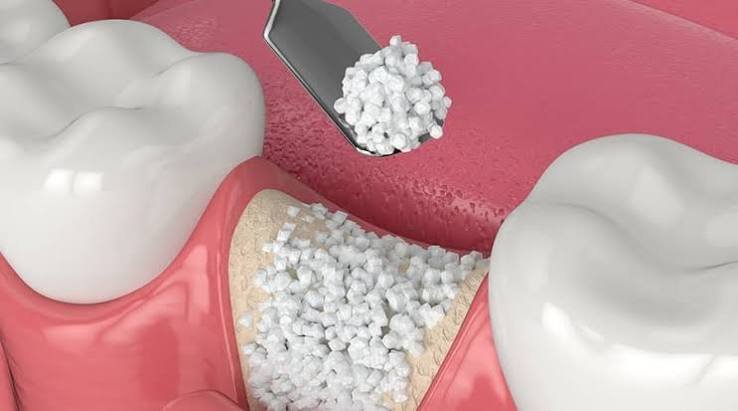
It is a surgical procedure that allows patients to increase or repair bone within their jaw. Over time, when a tooth is missing, the jaw bone may recede. This can cause issues when placing a dental implant. A graft will be placed into the area by a dentist or oral surgeon.
The graft will encourage the body to grow new bone tissue over time to increase the structure and strength of the jawbone. It may be performed weeks/months before a dental implant or in conjunction.
Common reasons for needing a bone graft:
1. Long-Term Missing Teeth
When a tooth is missing, the area of the jawbone will lose stimulation over time. This will cause the jawbone to resorb.
2. Gum Disease
The soft tissues and bones of the normal teeth get damaged very badly as a result of periodontal disease. There may be the requirement of having bone regeneration for patients who suffer from acute gum problem.
3. Trauma/Injury
The jawbone may get damaged due to accidents or trauma. It may be required.
4. Natural Bone Arrangement
Sometimes people will naturally have a thin jawbone or lack enough volume in certain areas. This can help create an ideal foundation.
5. Extraction
After tooth extraction, the surrounding jawbone may start to recede. A socket preservation bone graft can help reduce any bone loss.
The type of bone graft will depend on how much bone loss there is and where the missing tooth is.
The most common types are:
1. Autogenous
The procedure requires taking bone from another part of the body. This can be taken from the jaw or another suitable area. As it comes from the patient, it will contain natural bone-forming elements.
2. Allograft
Allografts are obtained from donor bone. They will be processed from a tissue bank. This will form a framework for new bone growth. It will not require another surgical site.
3. Xenograft
Xenografts come from animal bone, often of bovine origin. They will be specially processed to be used in dentistry. It can act as a framework for new bone tissue.
4. Alloplastic
Alloplastics are artificial materials that build a structure for bone regeneration.
A dental bone graft generally consists of:
Step 1: Preliminary Scrutiny
Initially, there will be an examination of the patient’s teeth, gums, and jawbone. Moreover, digital X-rays or CBCT will help determine the height, width, and density.
Step 2: Treatment Arrangement
Based on the examination, the dentist will determine which type of graft is required, whether it will be a separate treatment or in conjunction with implants.
Step 3: Bone Graft Placement
Local anaesthetic will be applied to numb the area. The dentist will then carefully place the chosen bone graft into the area. Sometimes a membrane will be used.
Step 4: Healing and Bone Regeneration
Over the next few months, the body will begin to incorporate it. It will encourage new bone to grow. How long this takes will depend on the size and area.
Step 5: Dental Implant Engagement
Once there is enough healing, a dental implant can be placed. In some cases, this may have been placed during the same surgery.
The healing process is purely based on the complexity of the grafting process that has been undertaken. For example, a small bone graft may heal in a few months. On the other hand, a larger one may require almost six months’ time or more than that prior to the placement of an implant. It is, therefore, necessary that patients should not skip their follow-up appointments, and they should also follow their dentist’s post-operative professional advice.
Many patients will be able to have them without a bone graft as they will have sufficient volume. However, if a patient has suffered from significant bone loss, they may require some extra treatment. Depending on the situation, short or angled implants may be an alternative.
Not everyone will be suitable and would require careful consideration from an experienced dental implant doctor. A thorough clinical examination and CBCT will help determine the right treatment.
Having a strong and healthy jawbone is essential to successfully place them. If a patient doesn’t have enough volume, a bone graft can be used to help regenerate the jawbone. This can allow them to have implant treatment.
It is necessary to carry out an initial assessment that will help in making sure that a patient receives effective treatment. Moreover, suitable treatment arrangements and appropriate post-operative care can help in providing a positive result.
It is, therefore, necessary to get in touch with a tooth implant dentist in India when someone is planning to undertake such treatment or has been advised to undertake bone grafting. The best implantologist, Dr. Prabhjeet Singh Sethi at his dental implant clinic in Kolkata, India, will help you in preparing a modified treatment plan.
For professional dental implant treatment, contact our best dental clinic in Kolkata, India, Dontia Care Clinic-Dental.